
How Google’s New AI Pricing Calls Will Change Leads For Lawn And Landscape Companies

Summary
Google is rolling out a feature that lets homeowners click a button in Search, have AI call multiple local businesses, and receive a simple email with prices and options. That sounds small, but it changes how people shop for services and how lawn and landscape companies get pre qualified before a real conversation even starts. In this article, we break down what these AI pricing calls do, why they matter for our industry, how to think about them with a healthy mindset, and a practical game plan so you are ready when Google’s AI agent calls your business.
What Google’s New AI Pricing Calls Actually Do
When a homeowner searches for a local service, Google can now step in and do the “calling around” for them using AI. It is one more layer between the search box and your office phone.
The “Have AI Check Pricing” Experience
From the homeowner’s side, the flow looks roughly like this:
-
They search “landscaper near me,” “yard cleanup near me,” or “mulch installation near me.”
-
Alongside the usual map and website links, they see an option like “Have AI check pricing.”
-
They fill out a short form that describes what they need, when they need it, and how to contact them.
-
Google’s AI calls multiple local businesses, asks about pricing and availability, and records the answers in a consistent format.
-
The homeowner gets a summary of options in an email or message.
Google is taking the “call three or four places for quotes” task and letting AI handle it.
AI Agents Like “Ask For Me” And “Let Google Call”
These pricing calls sit in a bigger family of AI agents that Google is building:
-
“Ask for Me” that calls service businesses and asks questions or books appointments.
- “Let Google call” that checks in store product availability and pricing.
The common pattern is simple. A user asks, then an AI agent goes out into the real world and completes tasks on their behalf, including phone conversations.
Early Stage Feature That Will Keep Evolving
The feature is still in an early stage:
-
It appears first in certain service categories and markets.
-
The interface, wording, and behavior are being tuned.
-
There will be bugs, uneven rollouts, and strange edge cases.
Details will change over time. The important part for lawn and landscape owners is the direction, not the exact button label in the search results.
We have more good news for you.
We’ve created the Ultimate GBP Checklist for you to DIY!
NO Contact Info Required, NO Sales Pitch, NO BS.
Why This Matters For Lawn And Landscape Businesses
Most lawn and landscape owners are already behind on basic online visibility. A huge number still do not have a free Google Business Profile set up at all, let alone optimized. At this pace, owners who ignore tools like this will not simply stay the same. They will age out of the real buying journey that homeowners actually use.

From Ranking To Pre Qualification
Until now, the typical sequence looked like this:
- Rank in Google.
- Show up in the map or organic results.
- Let homeowners click, call, or submit a form.
With AI pricing calls, there is a new step in the middle:
- Rank in Google.
- Get selected by Google’s AI as a possible match.
- Pass a pre qualification step where AI calls and asks about pricing and availability.
- Then appear in the homeowner’s comparison email.
It is no longer enough to show up in the maps. Your ability to respond to these AI calls clearly and consistently becomes part of whether you make the shortlist.
Owners Who Ignore Tech Will Fade Out
Too many owners in this industry ignore, neglect, or outright reject technology. They never claim their Google Business Profile. They refuse to modernize their phones. They build their entire marketing plan around yard signs and word of mouth.
At the same time, the platforms that control attention are building tools like AI agents and pushing more user behavior through them. Organic search traffic that used to go straight from the map to your website or phone is being converted into AI driven flows.
If you keep your head buried in the dirt like an ostrich because of some information bias, you will not hold your ground. You will slowly disappear as a meaningful competitor. We will see you in a few years when you finally give in to the convenience of this technology, the same way some people fought the move from beepers to smartphones until they no longer had a choice.
Price Shoppers, Transparency, And Real Opportunity
Service businesses already dodge pricing questions all the time. Many owners panic when a customer asks “how much” before they can give a full site visit or a long explanation.
The AI layer does not create price shoppers. It organizes their behavior.
In a world where an AI agent is collecting quotes side by side, the company that gives a clear minimum investment and realistic range looks confident and honest. The company that refuses to give any numbers at all looks like it is hiding something.
With the right approach, you can present your pricing in ranges with clear next steps, filter out the people who were never going to be a fit, and stand out as the professional who knows their numbers and respects the customer’s time.
Mindset: From Fear And Cynicism To Opportunity
Before any script or checklist, mindset is what matters. How you think about these calls will drive how your team responds.

There Is A Human Behind Every AI Call
At the end of this process is a real person who wants their yard taken care of and is willing to pay a professional to handle it.
The AI voice is the messenger. You can either:
- Treat it as an annoyance and punish the homeowner for using a convenient tool.
- Or treat it as a helpful assistant that is trying to bring you a qualified opportunity.
If you walk into these interactions with good faith and a desire to serve, it shows in the way you answer. You can be honest, clear, and generous, even through an automated conversation.
Common Objections And Better Ways To Look At Them
A few common objections come up quickly.
- “This will never work.”
It already works in other service categories. Platforms at Google’s scale test, iterate, and either improve or remove features based on real data. - “Google does not know what it is doing.”
Google is a multi trillion dollar company whose business depends on people trusting its results. That does not make every idea perfect, but it does mean they take performance seriously and will not keep a feature that consistently fails. - “This is going to be Price Shopper Central and the leads will be horrible.”
The price shoppers are already here. Right now they tie up your office with phone calls and never buy. With the AI layer, you can set a minimum investment and expectations up front, which can actually reduce wasted time. - “Anyone who uses this tech is not a good customer for me.”
Many ideal customers are younger families, busy professionals, and dual income households who value convenience. Using an AI button in Google does not automatically make them cheap or disloyal. It makes them efficient.
Staying stuck in these negative loops keeps you from learning a new skill set that other companies in your market will gladly adopt.
Seeing AI Agents As The New Infrastructure Of Search
AI agents like “Ask for Me,” “Let Google call,” and the pricing checker are early examples of a new infrastructure for local search. Users will increasingly:
- Describe what they want in natural language.
- Let an AI agent gather options and do some pre qualification.
- Make decisions based on a short list.
This can feel intimidating, or it can be a clear signal that it is time to build systems that work well with that infrastructure instead of fighting against it.
Your Game Plan: How To Prepare Your Lawn Or Landscape Company
This does not have to be complicated or overwhelming. It does need to be intentional.

Step 1: Fix Your Google Business Profile And Phone Routing
Start with the basics.
- Claim and verify your Google Business Profile.
- Choose accurate primary and secondary categories that match the services you actually want to sell.
- Make sure your phone number, service area, and hours are correct.
Then look at the path from an incoming call to a real answer:
- If you use a spam fighter that forces callers to press a number or jump through hoops, there is a good chance Google’s AI agent will never reach a human.
- If your system routes through a complicated phone tree, the AI may get stuck or hang up.
Aim for a clean, simple route from “Google is calling” to “someone or something helpful answers quickly.
Step 2: Build A Practical Pricing Framework
You do not need to give exact quotes on these calls. You do need a clear, consistent way to talk about money that your team or AI receptionist can follow.
A solid framework has three parts.
2.1 Create Pricing Matrices For Your Core Services
Pick your top services first. For many lawn and landscaping companies, that might be:
- Weekly or biweekly mowing.
- Seasonal cleanups.
- Mulch or rock installation.
- Bush trimming or small pruning.
- Basic landscape enhancements.
For each service, build a simple matrix that covers:
- Rows for different job sizes or tiers, for example small, medium, large.
- Columns for key factors like lot size brackets, debris volume, or number of beds.
- A minimum investment for each combination, plus a typical range.
- Seeing AI Agents As The New Infrastructure Of Search
You can set this up in a basic spreadsheet:
- Column A: Service tier, for example standard cleanup.
- Column B: Typical property size or complexity band.
- Column C: Minimum price.
- Column D: Typical price range.
When Google’s AI asks, your script can pull directly from this matrix so the answer is grounded in reality, not a guess.
2.2 Identify Key Variables For Each Service
Next, list the variables that move price up or down. Common variables in lawn and landscaping include:
- Square footage and bed count.
- Slope, access, and obstacles.
- Amount of debris, leaves, or overgrowth.
- Hauling and dump fees.
- Travel distance and crew size.
- Quality or warranty level for materials.
You can set this up in a basic spreadsheet:
- Larger corner lots move the job into a higher tier.
- Heavy debris or hauling adds a set amount or bracket.
- Steep slopes or difficult access bump the job to a premium rate.
When you or your receptionist answers the AI call, you can quickly ask one or two clarifying questions, mentally place the job in the right box of your matrix, and give a realistic ballpark anchored in those variables.
2.3 Keep It Simple For Solo Operators
If you are a solo operator or very small team, you do not need a complex pricing system to participate.
A few simple tools can go a long way:
- A notes document on your phone with your minimums and typical ranges for each core service.
- A basic spreadsheet in Google Sheets with the matrices described above.
- Saved text snippets or templates that you can reference when an AI caller or customer asks for a ballpark.
The goal is not to turn your business into a math lab. The goal is to get pricing out of your head and into a simple format you can use under pressure, so your answers are consistent and confident instead of scattered.
Also remember that Google’s AI is likely reading your website and Business Profile for pricing information. If you list clear minimums and ranges there, the agent may not need to call as often for basic questions, and when it does call, it will be building on information you already provided.
Step 3: Decide Who Answers – Human, AI, Or Both
There are a lot of jokes about AI receptionists talking to Google’s AI pricing agent. It sounds ridiculous, but there is real opportunity.
Humans are imperfect. Unless you have a well trained office manager, the person answering the phone can easily:
- Forget a service you offer.
- Misstate a minimum.
- Guess at a price range.
- Fumble your unique selling points.
An AI receptionist that is trained on your services, pricing matrices, service area, and differentiators can provide clearer, more consistent answers to Google’s AI than a rushed crew leader ever will.
A practical approach:
- Train a specific person in your company to handle these calls, with scripts and examples built around your matrices.
- Add an AI receptionist to catch after hours calls and back up your team during busy days.
- Improve the AI over time so it learns patterns and handles more of the common questions correctly.
The point is not to be trendy. The point is that whoever answers can represent your company well and give the AI agent what it needs to put you in a good light.
Step 4: Monitor And Optimize How Calls Go
Treat this like any other marketing channel that you want to improve.
- Tag or label AI related calls in your CRM or call tracking.
- Keep notes on what the AI asked and how you responded.
- Review a handful of interactions each month with your team.
Questions to ask:
- Are you getting the kinds of requests you actually want?
- Are your minimums and ranges attracting the right people?
- Are there common questions your site and profile should answer more clearly?
This feedback loop lets you refine your pricing language, website content, and internal scripts instead of flying blind.
Step 5: Decide When Opting Out Makes Sense
You can opt out of Google’s automated calls inside your Business Profile settings, or verbally during a call.
There are situations where a temporary opt out might make sense:
- Your phones and routing are a complete mess.
- You have no clarity on pricing and need to fix your numbers first.
- You are booked solid and truly cannot take on any more work.
Even then, it is important to understand the tradeoff. As Google routes more user behavior through AI request flows, opting out does not keep you where you are. It slowly removes you from the pool of companies that are considered and compared for these requests.
For most owners who want to grow, it is better to get the basics in place and participate than to sit on the sidelines.
Bigger Picture: Data, Matching, And The Future Of Local Search
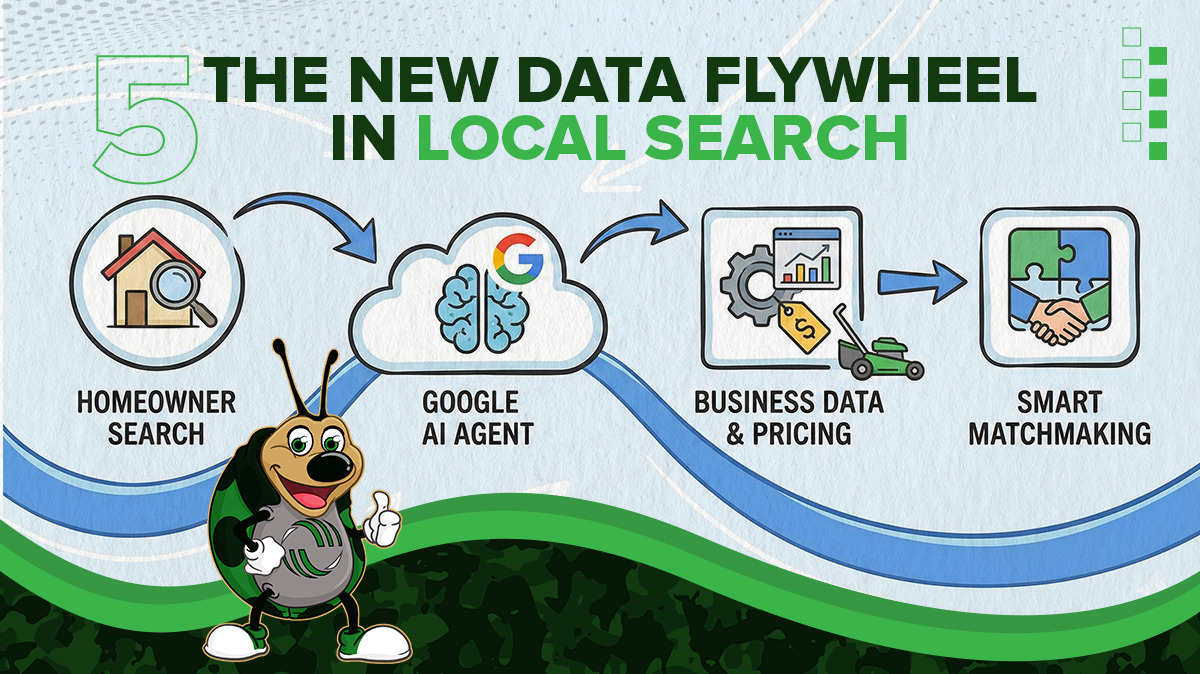
These calls are about more than convenience. They feed a much larger data loop that will shape how local search works.
Google’s Growing Understanding Of Users And Businesses
Every AI pricing interaction teaches Google something:
-
What real homeowners are asking for.
-
Which businesses pick up and provide clear answers.
-
Typical price ranges for different services in different neighborhoods.
-
Which quotes tend to turn into real jobs.
Over time, this lets Google:
-
Identify businesses that are reliable and responsive.
-
See which companies serve premium, mid market, or budget buyers best.
-
Improve how it matches users and providers.
It is easy to imagine a future where higher budget homeowners who value quality are paired more often with vetted, higher priced providers, with much less effort spent on research and credibility checks. The platform sits in the middle and uses its data to create better matches.
How This Could Affect Organic And Paid Over Time
Right now, these calls live on the organic side of search. There is no per lead fee attached.
In the future, this data could influence:
-
Which businesses Google is more confident showing at the top.
-
How different ad formats work and who is eligible for them.
-
New products that bundle matching, pricing, and booking into more streamlined flows.
We have seen this pattern before. When X rolled out paid verification and subscriptions, other platforms like Meta watched the response and then launched their own versions. Once one platform proves that a feature improves engagement and revenue, others often follow.
With AI agents, we should expect similar behavior across platforms that serve local businesses.
AI Agents Are In Their Infancy
These pricing calls, “Ask for Me,” and “Let Google call” are early examples of a broader shift.
We can think of this moment as the infant stage of AI agents in local service buying. The concept is here. The tools are clunky in places. The rules are not fully settled.
Companies that start learning how to work with these agents now will be much better positioned when they become a normal, expected part of how homeowners hire professionals.
FAQ: Real Concerns From Landscapers Answered
Do We Have To Pay For Leads From These AI Calls?
This feature sits on the organic side of search. Homeowners do not pay extra to use it, and businesses are not charged a per lead fee just because Google’s AI reaches out.
That could change in the long term if Google decides to pair this behavior with paid products, but there is no pay per lead structure attached to the calls themselves right now.
Can Competitors Abuse This To Spam Our Phone?
In theory, a competitor could try to trigger AI pricing requests repeatedly that include your business. In practice:
-
Google has strong incentives to limit abuse and cap call frequency, because it needs businesses to treat these calls as legitimate.
-
It takes effort to fake request details at scale, and most bad actors prefer easier tactics.
Abuse is possible, but if Google is paying attention to quality, it is unlikely to be a serious long term problem for most lawn and landscaping companies. It is worth monitoring, not a reason to avoid the feature entirely.
What Happens If We Do Not Participate At All?
If you ignore or opt out of AI pricing calls, your business can still appear in the map and organic results, but you stop showing up inside this new comparison layer where homeowners see side by side options.
As more search traffic flows through AI requests, that means:
-
Fewer high intent opportunities that even reach your phone or inbox.
-
More of those opportunities going to competitors who do participate.
-
The illusion that nothing has changed while your share of the market quietly shrinks.
The only scenario where non participation might make sense is when you truly have no capacity or your pricing and phones are so broken that you would rather fix the foundation first. Even then, it should be a temporary decision, not a permanent stance.
How Will We Quote Higher Ticket Jobs Like Outdoor Living Areas Or Landscape Construction?
For higher ticket jobs, the goal is not to give a full design build quote over an AI call. The goal is to:
-
Share a realistic minimum investment and range for the type of project requested.
-
Show that you specialize in that kind of work.
-
Invite the homeowner into a proper design or consultation process.
A simple way to handle this is:
-
Create a separate pricing matrix for outdoor living and construction with minimum project sizes, for example most projects start at a certain investment and typically range through a few common bands.
-
Include a few example levels, like basic patio, patio plus simple seating wall, and full outdoor living space with lighting, each with a starting point.
-
Train whoever answers the call to share those bands, then clearly state that final pricing is always based on a design consultation and plan.
That way, the AI caller gets something concrete to relay to the homeowner, and you protect your time and margins by moving serious buyers into a structured design process.
How Should We Update Our Website To Benefit From This?
Think of your website as a sales tool that AI and humans are both reading.
A few high leverage updates:
-
Create or refine individual service pages for your core offers, for example lawn care, landscape maintenance, cleanups, mulch, outdoor living, and landscape construction.
-
Add clear starting at or typical range pricing for those services so visitors and AI agents can understand your ballpark investment levels.
-
Highlight your unique selling points, such as quality standards, guarantees, design process, or communication habits, near the pricing so the numbers are not floating in a vacuum.
-
Add a short FAQ on each service page that mirrors the way real homeowners ask questions, including timelines, scope, and what is included.
-
Make sure calls to action are clear, for example request a design consultation for higher ticket work and request a quote for maintenance or smaller projects.
The clearer your content is, the easier it is for both humans and AI to understand what you do, who you serve best, and whether your pricing and approach fit what the homeowner is looking for.
Conclusion
Google’s new AI pricing calls mark a real shift in how homeowners shop for lawn and landscape services and how local businesses get pre qualified.
We now live in a world where:
-
Ranking on Google is necessary, but no longer enough on its own.
-
AI agents are stepping between the search result and your office phone.
-
Your responsiveness, clarity, and mindset when those agents call influence how many opportunities you actually see.
Owners who ignore these changes and reject technology will not hold their ground. They will be slowly removed from the real buying journey as platforms push more interactions through AI. Owners who lean in, build simple systems, and keep a heart for serving real humans on the other side of the call will be in a much stronger position.
If we view this feature as an example of the innovation still to come, it can actually be encouraging. The platforms are working hard to make it easier for good businesses and good customers to find each other. Our job is to build companies that are ready to meet them there.
Other Blogs
Why Most Lawn & Landscape Companies Fail Even With Great Marketing
Share on Social Table of Contents Google Business Profile (GBP) Google Local Service Ads (LSAs) Custom Website & SEO Other Summary Plenty of lawn and landscaping companies invest in...
What To Do When Your Google Reviews Disappear – Lawn and Landscape Edition
Share on SocialTable of Contents Google Business Profile (GBP) Google Local Service Ads (LSAs) Custom Website & SEO Other Summary If your Google reviews have suddenly disappeared or...
Best Way To Get Leads For Lawn & Landscape Businesses
Share on SocialTable of Contents Google Business Profile (GBP) Google Local Service Ads (LSAs) Custom Website & SEO Other Introduction As a niche-based marketing agency, we are always...